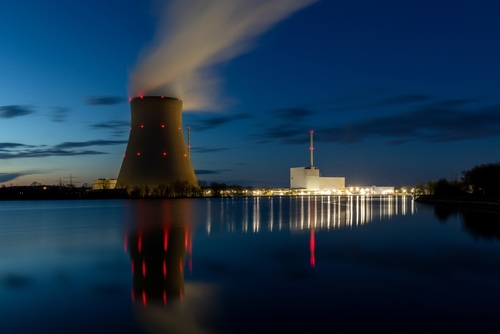
Europe’s oldest nuclear plant just shut down in a heatwave — and the way regulators did it shows how green rules can undermine reliable baseload power without improving the climate.
Story Snapshot
- Switzerland’s Beznau nuclear plant halted both reactors after river temperature hit a strict 25°C limit.
- Officials say there is no threat to grid stability or reactor safety; the shutdown is purely environmental.
- Thermal discharge rules now force nuclear plants offline during heatwaves, even as demand and emissions stay high.
- Past nuclear closures show that lost nuclear power is usually replaced by gas and coal, driving up carbon emissions.
Heatwave Triggers Shutdown At Europe’s Oldest Nuclear Plant
Switzerland’s Beznau nuclear power plant, the oldest operating nuclear facility in Europe, has temporarily shut down both reactors after a heatwave pushed river temperatures over a legal limit.[8] The plant draws cooling water from the Aare River and returns it slightly warmer, so regulators cap the river at 25 degrees Celsius once the cooling water has fully mixed.[4] When that threshold was reached again and “sufficient cooling is not in sight,” Axpo, the operator, shut down both units on June 26.[1][8]
Axpo had already reduced Beznau’s output to around 50 percent earlier in the week, as the Aare crept toward the 25-degree ceiling.[6][22] Swiss authorities issued an interim order making that temperature limit binding for Beznau after the extreme summer of 2018, when river temperatures repeatedly exceeded safe levels.[4] The company’s public statement makes clear the move is framed not as a reactor emergency, but as an environmental compliance step “to protect the Aare ecosystem” and meet strict legal requirements.[1]
Regulators Say Grid And Reactor Safety Are Secure
Swiss regulators and Axpo stress that the shutdown does not threaten electricity supply, reactor safety, or grid stability.[5] The move was coordinated with the Federal Electricity Commission, the national grid operator Swissgrid, and the nuclear watchdog Swiss Federal Nuclear Safety Inspectorate.[4][5] Officials explain that hot weather poses no direct threat to nuclear safety at Beznau; the concern is thermal stress on fish and other aquatic life in an already warm river.[2]
Axpo says national supply “remains secured through imports” and other generation while Beznau is offline, underscoring that Switzerland has built reserve margins and hydropower capacity to cover short-term nuclear losses.[6][4] In past heatwaves, similar temporary shutdowns in Switzerland and France have not led to blackouts, thanks to contingency plans and diverse power sources.[3] Beznau itself already went offline for about a week during a 2025 heat episode for the same river-temperature reason, with no reported impact on grid stability.[5][6]
Environmental Protection Versus Reliable Baseload Power
Supporters of the shutdown argue that limiting warm water discharge during heatwaves is essential to prevent fish deaths and long-term damage to the river ecosystem.[5] Regulations now require Beznau to suspend activity if the Aare exceeds 25 degrees Celsius for more than three consecutive days after mixing with cooling water, a rule designed to keep thermal stress within safe bounds.[2][4] Swiss officials describe these limits as part of a broader effort to adapt energy infrastructure to changing climate conditions.[3]
Critics, however, question whether forcing emissions-free nuclear units offline truly helps the environment. Research on nuclear shutdowns in the United States finds that when nuclear plants close, natural gas usually becomes the primary replacement, boosting carbon emissions by tens or even hundreds of millions of tons over time.[11] One study of the San Onofre Nuclear Generating Station closure calculated an extra 9 million tons of carbon dioxide in the first year alone, equal to about 2 million more cars on the road.[13]
What Beznau’s Case Signals For The Energy Debate
The Beznau shutdown highlights a growing pattern: nuclear plants in Europe are increasingly forced to reduce output or halt operations during extreme heat when river cooling limits are breached.[3] Operators and regulators emphasize that these measures are legally mandated and aimed at protecting local ecosystems, not responding to reactor faults.[1][4] Yet each shutdown chips away at steady baseload power, even as many governments say they want to cut fossil fuel use and stabilize their grids.[20]
BREAKING: Switzerland’s Beznau nuclear plant halts operations due to heatwave: operatorhttps://t.co/jUyYXGa7dB
— Insider Paper (@TheInsiderPaper) June 26, 2026
Nuclear power plants do not emit carbon dioxide while operating, and they provide round-the-clock electricity without the swings of wind and solar.[12][16] For conservatives who value reliable energy, national sovereignty, and hard limits on government-driven climate experiments, Beznau’s case raises an important question: are strict thermal rules striking the right balance between local environmental protection and wider energy security, or are they another example of green policy that sounds good but pushes nations toward more gas, more coal, and more dependence on foreign supply?[11][20]
Sources:
[1] Web – Switzerland’s Beznau nuclear plant halts operations due to heatwave: …
[2] Web – Beznau Nuclear Power Plant responds to high Aare water …
[3] Web – Swiss nuclear power plant shuts down due to heat – Le News
[4] Web – Nuclear power plants shut down in France and Switzerland as …
[5] Web – Extreme Heat Shuts Down Some Nuclear Reactors in Europe
[6] Web – Swiss nuclear plant shut down as river temperature rises amid …
[8] Web – Beznau to operate beyond 60 years – World Nuclear News
[11] Web – [PDF] Review of the Environmental Impact of Nuclear Energy
[12] Web – [PDF] The U.S. without Nuclear Energy: A Report on the Public Impact …
[13] Web – Environmental impact of nuclear power – Wikipedia
[16] Web – Impact of Nuclear Shutdowns – Center for Climate and Energy …
[20] Web – Beznau NPP to be operated until 2032-2033, then decommissioning
[22] Web – Understanding the German Nuclear Exit | Heinrich Böll Stiftung