Americans’ trust in colleges has fallen so far, and split so sharply by politics, that many now see higher education as just one more broken institution serving elites instead of ordinary people.
Story Snapshot
- Public confidence in colleges has dropped from nearly 60% a decade ago to under 40% today.
- Many Americans say colleges push politics, fail to teach job skills, and cost too much.
- Republicans’ trust in higher education has collapsed, while Democrats’ confidence has only dipped.
- Students and alumni still say college helps them get good jobs, showing a sharp perception gap.
Confidence Drops as Americans Question College’s Promise
Gallup’s long-running surveys show a steep slide in trust in higher education over the past decade, from about 57% confidence in 2015 to 36% by 2023–2024. A brief rebound in 2025 lifted confidence to about 42%, but newer polling finds it slipping again to around 38%, leaving fewer than four in ten adults with strong faith in colleges. This pattern fits a broader loss of trust in national institutions, where many Americans feel the system serves insiders, not ordinary families.
When Gallup asked people who had little or no confidence in colleges why they felt that way, three themes dominated: political agendas in the classroom, poor job preparation, and high costs. Roughly four in ten skeptics pointed to politics, saying colleges push one side and shut out other views. About a third said schools do not teach the right skills for today’s jobs, and about a quarter focused on rising tuition and debt, which they see as blocking the American Dream for non-elite students.
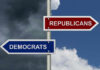
Partisan Divide and Growing Anger at “Elites”
The trust gap between Republicans and Democrats is now one of the starkest divides in American public life. Confidence among self-identified Republicans collapsed from about 56% in 2015 to just 26% in 2025, while Democrats fell more modestly from 68% to 61% over the same period. Independent voters also lost faith. Many conservative Americans describe colleges as dominated by liberal ideology, adding higher education to a long list of institutions they see as controlled by coastal elites and the “deep state.”
At the same time, Democrats and many moderates have their own doubts, especially about cost and fairness. Pew and Gallup data show rising concern across the spectrum about whether a degree is still worth the price and whether colleges widen the gap between haves and have-nots instead of closing it. Seven in ten Americans say higher education is heading in the wrong direction. For older liberals frustrated with inequality, and older conservatives angry about woke agendas and globalism, colleges now look like part of a federal system that protects itself first and students last.
Perception vs. Reality: Students Still See Value in College
Even as the public grows more skeptical, current students and alumni report a very different picture of college value. In Lumina–Gallup’s “College Reality Check” study, more than nine in ten students say they are learning skills they need for their careers, and about 90% say their courses teach job-relevant abilities. Three out of four graduates say their degree was critical or important to their career success, and about 80% of bachelor’s graduates land “good jobs” within one year of finishing.
Surveys also show campus climates are not as closed as many fear. Between 64% and 74% of students across political groups say they feel encouraged to share their views on campus, and most report a sense of belonging at their college. These internal reports do not erase real cases of bias or censorship, but they do suggest that the harshest “indoctrination” stories may reflect outside perception more than most students’ everyday experience. The gap between what America believes and what students live feeds confusion and distrust.
Costs, Debt, and the Feeling of a Rigged System
Anger about college costs runs deep, especially among working families who feel shut out. Public data and analysis show total student debt around $1.6 trillion, up more than 40% over ten years, which many see as proof that college has become a debt trap instead of a ladder to the middle class. Out-of-state public tuition near $27,000 a year reinforces the sticker-shock narrative, even though net prices for many aided students have stayed flat or fallen when grants are included.
Public confidence in ' #HigherEducation' continues its decline via latest indices produced by #Gallup: "The survey probed respondents for why they do or do not have confidence in higher education. For those who lack confidence, responses generally focus on three broad themes —… pic.twitter.com/8oYFtSESo2
— CARL J. KIECK INTERNATIONAL RESEARCH CONSULTANT (@KieckCarl) July 15, 2026
At the same time, the job market is changing in ways that weaken the old “college or bust” story. The share of jobs formally requiring a degree dropped from about half in 2017 to roughly 44%, and at least 16 states have removed degree requirements for many public sector roles. Employers still say graduates often need extra training, with about half reporting skills gaps they have to fix on the job. For Americans who already mistrust Washington and the education bureaucracy, these trends make colleges look slow, expensive, and unaccountable.
Where Reform Could Start: Transparency and Free Speech
Experts across the political spectrum argue that colleges could rebuild trust by being more transparent about money and outcomes. Program-level “return on investment” dashboards—showing typical debt, earnings, and job placement by major—would help families judge real value instead of relying on glossy marketing or scary headlines. Independent audits of campus free speech rules and viewpoint diversity could also test claims of ideological bias, providing hard evidence instead of talking points from either side.
Americans’ frustration is not only with colleges but with the wider system around them. Many see higher education leaders, state boards, and the federal Department of Education as captured by insiders who resist clear reporting on costs and results. In an era when trust in government is already badly damaged, every vague answer and every hidden metric feeds the sense that powerful institutions—colleges included—serve their own survival before they serve students, taxpayers, or the country’s founding promise of opportunity through hard work.
Sources:
facebook.com, news.gallup.com, gallup.com, washingtontimes.com, ednc.org, forbes.com, aau.edu, aol.com, universityworldnews.com