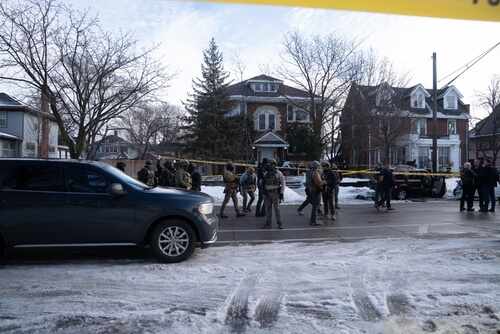
Five members of one Illinois family were gunned down across three locations, and prosecutors now say two teenagers planned and carried out the attacks.
Story Snapshot
- Two teens are charged with killing five relatives and wounding two more in a targeted East St. Louis shooting spree.
- A 16-year-old boy is charged as an adult with first-degree murder, dismemberment, and other felonies; a 15-year-old girl faces parallel murder charges.
- Police say the victims, ages 21 to 74, were all related to the girl, and the shootings hit three separate sites in the city.
- The case highlights deep worries about youth gun violence, justice for victims, and a system that seems unable to keep families safe.
What Police Say Happened to One Illinois Family
Illinois State Police say seven members of a single family were shot on Sunday in East St. Louis, a struggling city across the river from St. Louis, Missouri. Five relatives died and two survived with serious injuries after gunfire at three different locations, which police describe as a “targeted mass shooting” rather than random street violence. Officials say all of the victims were related to a 15-year-old girl now accused in the case. The dead range in age from 21 to 74, showing how the attack ripped through three generations of one family.
State police identified the relatives who were killed as Cherie L. May, Devin D. May, Patricia A. May, Quentin L. Thompson, and Shania W. Thompson. Two other family members were shot and rushed to a hospital in St. Louis, where they remain in serious condition. There were no bystanders hurt, which supports officials’ view that these shootings were aimed directly at this family and not at the wider public. Officers say they chased the suspects before arresting them at Holten State Park, a recreation area east of the city.
The Charges Against the Teenagers
On Tuesday, the St. Clair County State’s Attorney’s Office approved a long list of charges against a 16-year-old boy, named in court as Ja’ymier Davis, and his 15-year-old girlfriend. Both face multiple counts of first-degree murder for the five deaths, along with attempted murder and aggravated battery charges tied to the two surviving relatives. Prosecutors say Davis will be tried in adult court, while the girl’s case begins in juvenile court but could be moved to adult criminal court after review. This means both teens could face decades in prison if convicted.
Court records show Davis is charged with 12 felonies, including five counts of murder, two counts of attempted murder, aggravated vehicular hijacking, dismembering a human body, and unlawful use of a stolen firearm. One charge claims he killed 74-year-old Patricia May and cut off her right thumb, a detail that stunned residents already shaken by the killings. Local TV reports say prosecutors showed disturbing text messages in court that they believe were sent before the shootings, suggesting some level of planning. Police have said a stolen gun was used, raising more questions about how minors are gaining access to deadly weapons.
A Family, Two Teens, and a System Under Strain
Relatives told reporters that the teens’ desire to stay in a relationship, against the wishes of the girl’s family, played a role in the violence. While a clear motive has not been fully laid out in court, this early account points to a personal conflict inside the home rather than gang warfare or random crime. All of the victims were connected to the girl, which makes the case feel less like the typical public mass shooting and more like a tragic collapse of trust and safety within one family. Many locals now ask how warning signs were missed and why no one stepped in sooner.
East St. Louis has long struggled with poverty, crime, and weak services, leaving many residents feeling abandoned by leaders far away. Across Illinois, firearm deaths are a growing public health crisis, with young people and Black communities suffering a disproportionate share of homicides. Research also shows that in nearby Chicago, shooters are more likely to be teenagers, underlining a wider pattern of youth involved in serious gun crime. For people on both the right and the left, this case reinforces the fear that the government talks about safety but fails to stop guns from landing in the hands of angry, desperate kids.
Juvenile Justice, Public Anger, and Shared Questions
Illinois law allows courts to try 16-year-olds as adults in severe cases like mass murder, and prosecutors are using that tool here. Supporters say this is the only way to honor the lives lost and show that age does not excuse such extreme violence. Critics worry that teen brains are still developing and question whether adult prison can fix any of the deeper problems that led to the crime. Both sides, however, share a basic frustration: they doubt that lawmakers in Springfield or Washington, D.C., truly understand or care about life in places like East St. Louis.
East St. Louis mass shooting probe continues after 5 family members were killed. #Illinois #Crime https://t.co/NxThVBLc2F
— RiverBender.com (@RiverBenderNews) July 16, 2026
Conservatives see another example of a justice system that talks about reform while repeat violence continues, even as strict gun rules remain in place. Liberals see a poor, mostly Black community where families live with constant risk, little support, and limited mental health care, while leaders focus on slogans instead of real help. Together, they look at this family’s tragedy and ask the same hard question: how did two children get to the point of wiping out their own relatives in broad daylight, and why does it feel like no one in power is truly accountable for stopping the next time?
Sources:
youtube.com, washingtonpost.com, theguardian.com, abc7chicago.com, abcnews.go.com, facebook.com, news.wttw.com, npr.org