President Donald Trump’s White House meeting with Lebanon’s president is aimed at pushing Hezbollah back and locking in a rare chance for real peace on Israel’s northern border.
Story Snapshot
- Trump welcomed Lebanese President Joseph Aoun to the White House for their first in-person meeting, focused on a new U.S.-backed Lebanon–Israel peace framework.
- This is the first visit by a Lebanese president to the White House since 2009, underscoring the historic nature of the summit.
- The talks center on disarming Hezbollah and securing a phased Israeli military withdrawal from southern Lebanon under the Trilateral Framework.
- Mainstream outlets stress “war with Iran” and regional chaos, while Trump’s team frames the summit as a hard-won peace and security achievement.
Trump Uses the White House to Press a Rare Lebanon–Israel Peace Deal
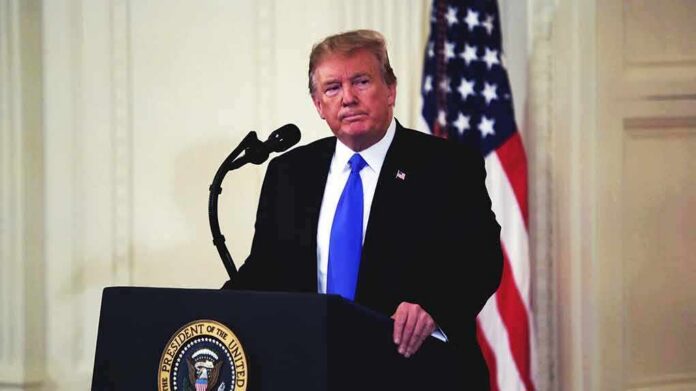
President Donald Trump welcomed Lebanese President Joseph Aoun to the White House to discuss how to put the new Trilateral Framework into action, a U.S.-backed deal between Lebanon and Israel signed in late June. The goal of that framework is clear: expand Lebanese government and army control in the south, push Hezbollah gunmen out of the area, and begin a phased withdrawal of Israeli forces from Lebanese territory. For many readers, this is exactly the kind of hard-nosed diplomacy they hoped for when they backed Trump’s return to office. Rather than chasing globalist photo-ops or vague “process,” the White House is using direct talks to try to calm one of the world’s most dangerous front lines, where Iran’s proxy forces have fired rockets at Israel for years.
Aoun’s visit is not just another routine meeting with a foreign leader; it is the first time a Lebanese president has set foot in the White House since 2009. Reports from the scene describe Trump greeting Aoun on the driveway, shaking his hand, and calling him “highly respected” before leading him inside to the Oval Office. That public welcome matters politically. It signals that the Trump administration is ready to back Lebanon’s state institutions instead of letting Iran’s allies call the shots. For conservatives who care about American strength, it also shows Trump is willing to put his own diplomatic capital on the line to demand that partners stand up to terror groups instead of appeasing them.
Disarming Hezbollah and Securing Israel’s Border Are Central Goals
Coverage of the summit makes clear that one of the main topics is the disarmament of Hezbollah, the Iran-backed militia that has long used southern Lebanon as a base to threaten Israel and drag the region into war. Under the framework, Lebanon is expected to expand its army’s control in the south and reduce Hezbollah’s presence while Israel pulls its troops back in stages. That approach fits with long-term U.S. policy that tries to limit threats from Hezbollah, help Lebanon guard its borders, and strengthen state institutions in place of armed factions. For an American audience worried about endless Middle East wars, the plan aims to replace militia rule with national armies and clear lines, which reduces the chance U.S. troops get drawn in later.
Lebanese and Israeli officials have already been holding rare direct talks in Washington, the first such negotiations between the two countries in more than 30 years. Those talks, mediated by the United States, seek a durable ceasefire along the Blue Line and a path to “long-term calm” after months of intense fighting between Israel and Hezbollah. By bringing Aoun to the White House while these talks are underway, Trump is trying to speed up implementation and make sure Lebanon’s president personally signs onto the security changes his own army must carry out. For conservatives who value clear lines of responsibility, that matters: it puts a named leader on the hook instead of letting shadow groups hide behind chaos.
Media Framing Emphasizes Iran War Over Trump’s Peace Push
Many mainstream outlets have chosen to frame the meeting as part of a broader “war with Iran” story rather than as a stand-alone peace and security effort. Some headlines highlight that Trump spoke about the ongoing conflict with Iran and regional tensions when reporters asked questions during the Oval Office portion of the visit. Others stress that the talks come “amid Iran war” or focus on the risk that Hezbollah might keep fighting, which feeds a sense of permanent crisis more than it explains the actual framework Trump is trying to enforce. This can leave viewers with the impression that nothing concrete is happening, when in fact the signed deal lays out specific steps for Lebanese and Israeli forces.
Policy analysts note that this summit is a make-or-break moment for the framework agreement, because it tests whether Aoun is truly ready to sever Lebanon from Iran’s orbit and reduce Hezbollah’s power. That goal aligns with what many on the right have called for over the years: stop sending American money into systems that empower terror groups, and instead reward countries that take real risks to stand up to them. Yet the same commentators warn that Lebanese politics are fragile, and some figures in Beirut have already pushed back against parts of the deal and against a proposed three-way meeting with Israel’s leader as long as Israeli troops remain in the south. Trump’s challenge is to cut through that resistance without letting Washington fall back into the old pattern of endless talks with no enforcement.
Trump’s Strategy: Support Sovereignty, Demand Results, Guard U.S. Interests
The Lebanese Embassy’s press release on the visit says the invitation reflects a long-standing partnership and offers a chance to discuss U.S. support for Lebanon’s sovereignty, stability, territorial integrity, and state institutions. In plain terms, that means backing Lebanon’s legitimate government while expecting it to control its own territory instead of letting Hezbollah build a state within a state. For constitutional conservatives, this emphasis on sovereignty crosses borders: they want Washington to respect America’s own borders and laws and to insist that partners abroad do the same. A country that cannot control its land or disarm militias, they argue, becomes a playground for hostile powers like Iran.
For Trump’s supporters at home, the Lebanon summit also fits into a bigger foreign policy picture. Rather than chasing regime-change wars or open-ended deployments, the administration is trying to lock in narrow deals that protect allies, keep terror groups back from Israel’s frontier, and cut the space for Iran to move weapons and fighters. At the same time, the lack of an official White House transcript so far means outside observers must rely on press coverage and video to parse every remark and promise. That gap fuels the usual “fake news” fights over framing, but the core facts are not in dispute: Trump invited Aoun, they met at the White House, and the talks are built around a signed framework to reduce Hezbollah’s power and stabilize the border—an outcome many conservatives have wanted for decades.
Sources:
theepochtimes.com, youtube.com, x.com, thehill.com, timesofisrael.com, news.cgtn.com