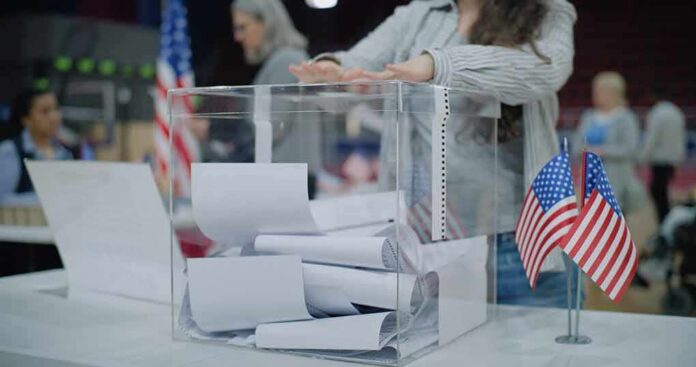
A federal appeals court gave the Trump administration a short-term win in its fight over mail-in ballot rules, but the rule is still blocked in key cases and has not taken effect nationwide.
Quick Take
- The D.C. Circuit Court of Appeals paused a lower court order and let the Postal Service keep moving in the case.
- The court did not decide the full legal fight, so the challenge is still open.
- Separate judges in Boston and Washington, D.C., have already blocked major parts of the plan.
- The dispute centers on whether the President and the Postal Service can impose new ballot rules on states.
Appeals Court Pause Gives the White House Breathing Room
The biggest immediate change came from the D.C. Circuit, which issued a stay while litigation continues. That is a temporary pause, not a final win on the merits. The panel said the Postal Service made a strong showing that it may succeed and could face harm if it cannot prepare the rule before the midterms.
That matters because the administration’s plan would affect how mail-in ballots are handled before federal elections. Supporters say the rule could tighten ballot tracking and limit delivery to approved voters. Critics say it would let Washington intrude on powers that belong to states and Congress. The appeals court did not settle that larger fight, so both sides are still headed back to court.
Separate Judges Kept Most of the Plan on Hold
The appeals court pause did not erase earlier rulings against the plan. In Boston, Judge Indira Talwani said the executive order ran beyond presidential power and found that the Constitution gives election rulemaking to states and Congress, not the President. In Washington, D.C., Judge Emmet Sullivan later blocked the Postal Service proposal nationwide after finding it conflicted with a Postal Service settlement tied to handling election mail.
Those rulings created a patchwork of legal limits. One court said the challenge was too early to block because the Postal Service had not finished its rule. Later courts went further and stopped the policy in whole or in part. For voters, that means the legal fight is not just about theory. It is already shaping whether the Postal Service can change how ballots move through the mail.
The Core Fight Is Over Who Controls Mail Voting
At the center of the case is a basic question with big political stakes: who gets to set the rules for mail voting. The administration’s order directs the Postal Service to build a barcode-based tracking system and work from state voter information. The White House says that helps protect election integrity. Opponents say the plan is a federal takeover of a system that the Constitution leaves to the states.
The fight also shows how distrust in government cuts both ways. Backers of the rule see a needed check on fraud and sloppy ballot handling. Opponents see another example of leaders trying to centralize power and rewrite election rules from Washington. For now, the practical result is confusion: one court has opened the door a little, while others have kept it mostly shut.
What Happens Next
The appeals court ruling is only a stay, so the deeper constitutional question is still alive. The earlier district court rulings remain important, especially the ones saying the order exceeds presidential authority and clashes with existing Postal Service obligations. Unless a higher court gives a final answer, states, voters, and the Postal Service will keep facing uncertainty heading toward the elections.
Sources:
thegatewaypundit.com, thehill.com, washingtonpost.com, reuters.com, theguardian.com