Lebanon’s latest wave of spy arrests shows how Hezbollah’s shadow war with Israel can drag everyday citizens into secret battles far from the public eye.
Story Snapshot
- Lebanese officials say 32 people were arrested for passing information to Israel that helped target Hezbollah leaders.
- One suspect, a singer said to be close to Hezbollah, allegedly gave coordinates used in an Israeli airstrike that killed a Hezbollah official and his son.
- Nine suspects have already faced a military court, with at least two sentenced to years of hard labor for aiding Israeli strikes.
- Past Lebanese spy cases show some arrests collapse for lack of evidence, raising fresh questions about proof and politics.
Lebanon Claims Spy Network Aiding Strikes on Hezbollah
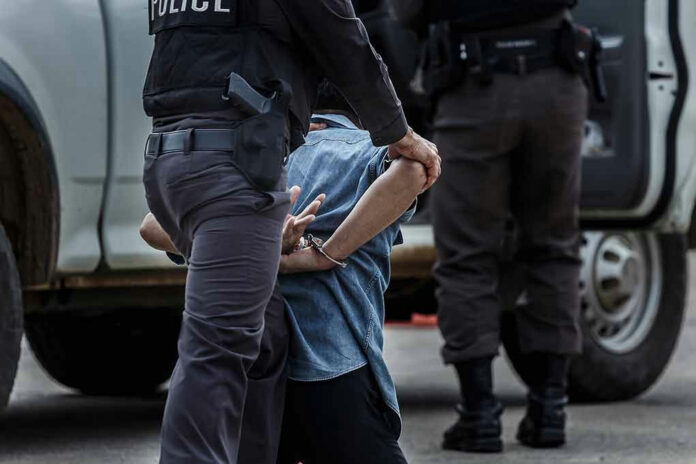
Lebanese judicial officials told reporters that security forces arrested at least 32 people in recent months for allegedly spying for Israel and helping attacks on Hezbollah targets. Authorities say these suspects passed information on Hezbollah leaders and positions that aided Israeli strikes across Lebanon during and after the latest round of fighting. Officials describe this as part of a wider espionage crackdown that has intensified as tensions stay high between Israel, Hezbollah, and the Lebanese state.
Sources say six of the 32 arrests happened before a ceasefire took hold, while the rest came afterward as investigators followed new leads. Of those detained, nine people have already been brought before Lebanon’s military court on charges of collaborating with Israel and providing targeting data. Two of these convicted suspects reportedly received sentences of seven and eight years of hard labor, a harsh punishment meant to signal that helping a foreign enemy in wartime will bring serious consequences.
A Singer Close to Hezbollah at the Center of a Deadly Strike
Lebanese reports highlight one case that stands out: a man described as a singer close to Hezbollah, accused of working with Israel’s Mossad spy agency in exchange for money. According to a second judicial official, this man allegedly provided precise coordinates that were later used in an Israeli airstrike in April 2025. That strike reportedly killed a Hezbollah official and his son after the ceasefire, suggesting continued covert targeting even while open fighting was supposed to be paused.
Officials say this suspect’s links to Hezbollah circles made him a valuable target for foreign intelligence, because he could move near senior figures without raising alarm. His case fits a broader pattern where Hezbollah and Lebanese security services claim that Israeli intelligence seeks insiders with social or professional access, rather than only recruiting obvious military figures. For conservative Americans, this underscores how terror groups and hostile states use soft fronts like culture and business to hide hard power operations.
Telecom Workers and Sophisticated Devices Raise Security Fears
Lebanon has long warned that its phone and internet networks are prime targets for foreign spying, and recent cases back that up. In an earlier crackdown, the country’s Telecommunications Minister Charbel Nahhas said police arrested a technician from one of Lebanon’s two main mobile networks, accusing him of spying for Israel for more than 15 years. Nahhas stressed that someone in that role could access sensitive data, including call records and location information, which could help track political and military figures.
Reports from past investigations describe Lebanese police displaying sophisticated spying devices seized from suspects, including equipment used to intercept communications or pinpoint locations. Security officials argue that such tools, combined with insider access at phone companies, make it far easier for foreign agencies to follow targets in real time. For Americans worried about digital privacy and government overreach, this shows how fragile critical infrastructure can be when insiders turn it into a weapon for hostile powers.
Pattern of Spy Arrests, and Questions About Proof
Lebanon’s claim of 32 new suspects comes on top of a much longer history of spy cases tied to Israel. Over the past decade and a half, Lebanese authorities working with Hezbollah say they have arrested more than 100 people for alleged collaboration with foreign intelligence such as Mossad and the Central Intelligence Agency. One report says Lebanon compiled about 150 espionage files to present as a complaint against Israel at the United Nations Security Council, highlighting how these cases are used in global diplomacy.
Yet not every arrest holds up. In earlier crackdowns, three of about 20 suspected spies detained since 2009 were later released, apparently for lack of evidence. The well-known case of Lebanese actor Ziyad Itani shows how fast a spy story can crumble. He was arrested, accused of meeting Israeli handlers, and accused of betrayal, only for a military judge to later dismiss the charges after further investigation, and the interior minister publicly cleared his name. These examples remind readers that anonymous official claims are not always backed by solid proof.
Why This Matters for American Conservatives
Hezbollah is an Iran-backed terrorist group that threatens Israel and helps destabilize the Middle East, so any disruption of its networks affects American interests and allies. At the same time, the way Lebanon pursues these spy cases should matter to liberty-minded Americans who care about due process and transparent justice. Many reports rely on unnamed judicial sources, and key documents like interrogation transcripts and technical evidence are not public. That leaves room for both real counterintelligence work and possible political abuse.
For conservatives who support strong borders, national defense, and clear rule of law, the lesson is simple: espionage is real, but so is the danger when powerful groups, including Hezbollah, control the story around arrests. In Lebanon, economic collapse and desperation have fueled at least 185 arrests on suspicion of collaboration with Israel in just three years, with only a fraction leading to confirmed convictions. That mix of real threats, deep poverty, and opaque courts is a warning of what happens when a country lets security politics outrun constitutional protections and open evidence.
Sources:
insiderpaper.com, barrons.com, today.lorientlejour.com, bbc.com, arabnews.pk, facebook.com, youtube.com, aljazeera.com, washingtonpost.com, presstv.ir