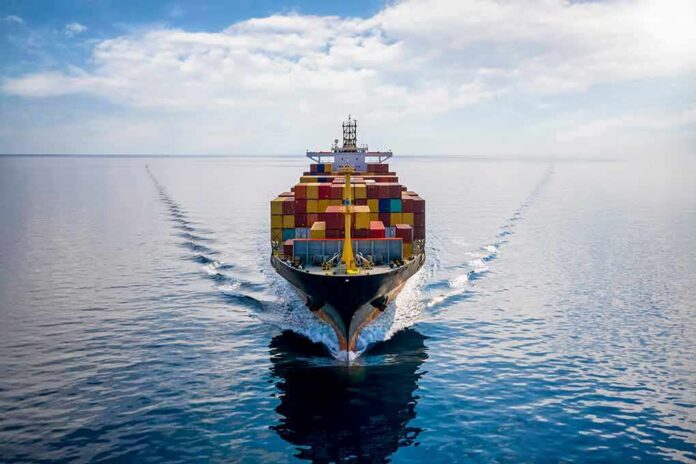
The Houthis have not literally “shut down” Bab al‑Mandeb, but they have reached a point where credible, conditional threats against this chokepoint function as Iran’s most potent economic leverage short of its own direct use of force.
Key Points
- Bab al‑Mandeb is now a deliberate pressure point in Iran’s confrontation with the United States, with the Houthis positioned as the proxy lever.
- Evidence shows Iran has discussed using the Houthis to threaten closure, and Houthi officials openly describe shutting the strait as an option in escalation.
- The Houthis already disrupt Red Sea traffic through targeted attacks and declared embargoes, affecting routing decisions and war‑risk premiums without a fully enforced blockade.
- There is no verified, sustained physical closure of Bab al‑Mandeb; the current “hostage” effect comes from risk, uncertainty, and the cost of guarding the corridor.
Bab al‑Mandeb as Iran’s Offshore Economic Deterrent
In every major Iran–U.S. crisis of the past two decades, the question has been how far Iran is willing to weaponize global commerce. The Strait of Hormuz has always been the obvious focal point; when traffic there is disrupted, the world notices immediately. What has changed in the current war is that Tehran appears to be cultivating Bab al‑Mandeb—1,000 miles away—as a second, deniable “nuclear option,” using Yemen’s Houthis as the operational instrument. Reuters reporting describes Iranian officials signaling they could play their “most dangerous card yet” by employing the Houthis to shut the Red Sea gateway, opening a new front against Washington and putting two of the world’s most important oil routes at risk. That concept, more than any single missile launch, is what turns the Houthis into a strategic economic asset rather than just a regional militia.
Bab al‑Mandeb’s significance is straightforward: it is the narrow passage connecting the Red Sea to the Gulf of Aden and Indian Ocean. In recent years, roughly 7% of globally traded oil and a major share of container traffic has transited its waters, linking the Suez Canal route to Asian markets. As Saudi and other Gulf exporters have rerouted crude through the Red Sea to mitigate Hormuz risk, the economic weight of Bab al‑Mandeb has only grown. Analysts now routinely describe the Houthis, who control much of Yemen’s Red Sea coast, as “de facto gatekeepers” able to selectively disrupt shipping with missiles, drones, and fast boats even without a classic naval blockade.
What Iran Has Asked, What the Houthis Have Said
The strongest piece of evidence for an Iranian design to use the Houthis as an economic weapon comes from Reuters. In a July dispatch, the agency reported that Iran, having already choked off shipping through the Strait of Hormuz, was signaling a shift to the Red Sea and had discussed using Houthi allies to shut Bab al‑Mandeb. A separate Reuters story, cited across Fox News and regional outlets, carried claims from multiple anonymous sources that Tehran’s leadership conveyed a request to the Houthis to prepare for closure if the United States attacked Iranian infrastructure. Those accounts are not backed by named Iranian officials or documentary orders; they rest on anonymous sourcing. But they are consistent with the broader pattern visible in public statements from Iran’s political and clerical elite, who have warned that allies could close Bab al‑Mandeb in response to U.S. escalation.
On the Houthi side, the most important shift is not a single press release but a change in how senior figures talk about the strait. A Yemeni military official, Abed al‑Thawr, is quoted as saying that closure of Bab al‑Mandeb is among the “primary options” the movement could use if the war with Iran escalates. A deputy information minister similarly framed shutting the strait as one option on the table. Yahya Saree, the long‑time Houthi military spokesman, has said repeatedly that operations against regional targets will continue “until the aggression ceases” on all affected fronts. Taken together, this is not a blueprint for immediate closure; it is escalation logic. The Houthis are making clear that maritime interdiction, including at Bab al‑Mandeb, is a lever they will pull if certain thresholds—U.S. strikes on Iran, Gulf participation in attacks—are crossed.
From Threats to Practice: How the Houthis Use the Sea
Long before Bab al‑Mandeb entered headlines as the “next Hormuz,” the Houthis had adopted maritime disruption as a routine tool of pressure. In response to Israel’s war in Gaza, they announced a “complete and total ban” on Israeli ships in the Red Sea, calling them legitimate military targets. BBC and other outlets have catalogued attacks and boarding incidents against commercial vessels in the southern Red Sea and approaches to Bab al‑Mandeb, often justified by the Houthis as solidarity with Palestinians. In 2026, they escalated further, declaring a maritime embargo on Saudi shipping through Bab al‑Mandeb and framing it as an “eye for an eye” response to what they called a criminal Saudi siege of Yemen.
These moves have had tangible operational effects. The U.S. Maritime Administration issued a formal advisory for the Red Sea, Bab el‑Mandeb Strait, Gulf of Aden, Arabian Sea, and Somali Basin, instructing vessels to alter operations, secure their automatic identification systems (AIS), and maintain contact information for U.S. Fifth Fleet and the UK’s Maritime Trade Operations in case of attack or suspicious activity. Suez Canal throughput has fallen to multi‑decade lows, with fleets rerouting around the Cape of Good Hope or delaying sailings because of Houthi threat calculus. Oil and container carriers have paid sharply higher war‑risk premiums and absorbed longer transit times. None of this requires the Houthis to sit astride the strait with warships; it only requires the credible possibility that an inbound tanker might be targeted.
Can the Houthis Actually “Close” Bab al‑Mandeb?
The phrase “close Bab al‑Mandeb” suggests a level of control that no actor has yet demonstrated. Here, the counter‑evidence is important. Analysts at Habtoor Research, reviewing AIS data and shipping reports, note that after multiple Houthi blockade announcements, traffic continued to flow through the strait, including vessels linked to the U.S. and Israel. The American Security Project reaches a similar conclusion: despite rhetoric and limited probing, the Houthis “have yet to attack commercial shipping” in a manner that produces sustained closure in Bab al‑Mandeb itself. Even Reuters, in its more alarmed framing about Iran’s pressure strategy, acknowledges that it is unclear how the Houthis could effectively enforce a full blockade against a determined multinational naval response.
Military capability is one constraint. The Houthis possess anti‑ship missiles, drones, and explosive‑laden boats, and they have shown they can strike tankers or at least credibly threaten them in nearby waters. That is enough to raise costs and deter risk‑averse shipowners. It is not enough to physically seal a corridor that major navies are committed to keeping open. Political calculus is another constraint. Analysts interviewed by The Media Line and Alhurra argue that a full attempt to obstruct Bab al‑Mandeb would impose costs not just on Saudi Arabia and the U.S., but on Yemen itself, which imports more than 90% of its food by sea. A sweeping closure would also antagonize China and other Asian customers whose energy security depends on the route. For a movement that relies on external political support and internal patronage networks, that kind of indiscriminate disruption is a risky play.
Where the Evidence Is Strong—and Where It Isn’t
On the core question—have the Houthis become Iran’s “nuclear option” against the global economy?—the record supports a nuanced but firm answer. It is well established that:
First, Iran has discussed, at high levels, using Bab al‑Mandeb as a second shipping chokepoint, with the Houthis as the proximate actors. This is not conjecture; it is embedded in Reuters’ own narrative of Iran’s shift from Hormuz to the Red Sea and echoed in policy analysis about Tehran’s search for additional pressure points.
Second, the Houthis publicly treat closing Bab al‑Mandeb as an option tied to escalation scenarios, and they have already imposed selective embargoes and carried out attacks that change global routing behavior.
Third, maritime authorities and major shippers respond to these threats as operationally significant. Advisories from the U.S. Maritime Administration, war‑risk pricing, and Suez traffic data all show that risk, not just realized attacks, drives decisions.
Where the evidence is weaker is in claims that the strait has been “shut” in the classical sense—no traffic, enforced interdiction across the board, sustained over time. Public data do not show that outcome, and several studies explicitly state that Bab al‑Mandeb remained open even during peak Houthi blockade rhetoric. Likewise, assertions that Iranian officers directly command every Houthi maritime operation rest heavily on anonymous sources rather than declassified communications or on‑record admissions.
Hostage Without Closure: The Real Economic Mechanism
Calling the Houthis Iran’s “nuclear option” is less about their ability to hermetically seal Bab al‑Mandeb and more about their ability to create a persistent, hard‑to‑price risk around it. Energy markets are structurally forward‑looking; traders respond not only to barrels that fail to arrive but to routes that might become unusable, insurers that might withdraw coverage, or navies that might be stretched thin guarding multiple chokepoints. The Houthis’ threats—conditioned on U.S. actions against Iran, Saudi airstrikes, or Gulf states joining attacks—inject exactly that kind of uncertainty.
In practice, this “hostage” dynamic works through a few mechanisms. Shipowners with exposure to Saudi or Israeli trade weigh the probability of interdiction against freight rates and insurance costs, and many opt to avoid the corridor altogether, diverting via the Cape. Gulf exporters must decide how much crude to push through Yanbu and Bab al‑Mandeb versus routing back through partially reopened Hormuz, balancing physical risk against political signaling. The U.S. and its partners, already busy keeping Hormuz navigable, now face a second corridor to patrol. All of that raises the marginal cost of pressure on Iran. Tehran can therefore argue—implicitly or explicitly—that further U.S. escalation will not just invite retaliation against American forces, but trigger wider disruption to global trade.
Implications for Policy and Commercial Strategy
For governments, the lesson is straightforward: treating Bab al‑Mandeb as a binary—open versus closed—misreads how economic coercion works in this theater. The Houthis, backed and influenced by Iran but acting with their own priorities, are capable of sustained harassment, targeted embargoes, and occasional high‑profile strikes that keep the corridor in a permanent “amber” status. That is enough to complicate sanctions campaigns, maritime blockades, and energy diplomacy. For commercial actors, the strait must now be managed as a chronic risk with acute flare‑ups, not a stable passage punctuated by rare incidents.
For the Houthis themselves, Bab al‑Mandeb is more than a bargaining chip against Riyadh; it is a route to strategic relevance in a war whose main theater lies far beyond Yemen. By making global markets care about what happens off their coastline, they amplify their political weight. For Iran, that is precisely why the relationship with the group matters: it offers a way to threaten the global economy indirectly, through a proxy that can plausibly claim its actions are about defending Yemen or Gaza rather than serving Tehran’s nuclear brinkmanship.
Sources:
19fortyfive.com, foxnews.com, youtube.com, maritime.dot.gov, bloomberg.com, time.com, timesofisrael.com, aljazeera.com, themedialine.org, ynetnews.com, straitstimes.com, cfr.org, hornreview.org, alhurra.com, americansecurityproject.org, reuters.com
The Saudi vessel NCC Masa sustained minor hull damage after it was attacked while sailing in the Red Sea on Friday, the Saudi Press Agency reported, citing an official source at the General Transport Authority.
The vessel continued to its destination after checks confirmed that…
— Alex kennedy (@Alexkennedy213) July 24, 2026